
Albania may be one of Europe's least visited countries, but UNESCO has taken notice. The country is part of four World Heritage inscriptions covering an ancient city buried by jungle, twin Ottoman towns frozen in stone and whitewash, one of Europe's oldest and deepest lakes, and vast primeval forests that have never felt an axe. Albania's UNESCO World Heritage Sites span 3,000 years of human history and some of the most intact natural landscapes in the Mediterranean. Yet most travellers have never heard of any of them.
Here is the complete guide to Albania's UNESCO inscriptions: what makes each one exceptional, what you will actually find there, and how to visit them.
"Albania possesses a remarkable concentration of cultural landscapes, archaeological sites, and historic urban centres that together represent some of the most significant human heritage in the Mediterranean world."
1 Butrint National Park
Inscribed 1992 · Extended 1999 & 2007Butrint is Albania's oldest UNESCO World Heritage Site and the one that arguably deserves the most time. Tucked inside a national park on a forested peninsula between the Vivari Channel and Lake Butrint, just a few kilometres from the Greek border, it is an ancient city that has been continuously inhabited for over 2,500 years.
Greeks settled Butrint in the 7th century BC, establishing a sanctuary to Asclepius, the god of medicine. The Romans followed, transforming it into a prosperous colony; Julius Caesar himself reportedly considered making it the site of a major settlement. Byzantines, Normans, Angevins, and finally Venetians all left their mark before the city was finally abandoned in the late medieval period, swallowed slowly by rising water levels and encroaching forest.

What makes Butrint extraordinary is the density and variety of what remains. Walking the site, you move through more than two millennia of history within the space of a few hectares: the Greek theatre (3rd century BC), the Baptistery with its spectacular mosaic floor (6th century AD), the Venetian Tower, Early Christian basilicas, Roman baths, and towering city walls that have stood for over 2,000 years. Almost nothing has been built over or destroyed; the forest simply reclaimed the city, preserving it under a canopy of subtropical trees.

UNESCO inscribed Butrint in 1992, citing its exceptional testimony to the cultural development of the ancient Mediterranean world and the outstanding quality of its archaeological remains. Extensions in 1999 and 2007 expanded the protected zone to include the surrounding wetlands and landscape buffer areas, which are critical habitat for rare bird species and migratory routes.
Explore Butrint National Park →2 Historic Centres of Berat and Gjirokastër
Inscribed 2005 · Berat Extended 2008In 2005, UNESCO made an unusual decision: it inscribed two Albanian cities under a single nomination. Berat and Gjirokastër are bound together by their shared Ottoman heritage, their extraordinary state of preservation, and the fact that both achieved National Museum City status in Albania before the world took wider notice. Together they represent the finest surviving examples of Ottoman-era urban planning and domestic architecture in the entire Balkans.
Berat: City of a Thousand Windows
Berat sits in the Osum River valley in central Albania, its hillsides covered in a cascade of white Ottoman houses, each with rows of large dark-framed windows that give the city its nickname. The historic old town is divided into three quarters: Mangalem on the lower western slope, Gorica on the eastern bank, and the medieval castle (Kalaja) crowning the hilltop above them both.

The castle is a city within a city: inhabited continuously since the 4th century BC, it contains Byzantine churches, mosques, a bazaar, and residential streets where people still live today. Below it, the Mangalem quarter preserves some of the finest 18th and 19th century Ottoman domestic architecture anywhere in the Balkans: multi-storey whitewashed houses with ornate wooden interiors, projecting upper floors, and carved ceilings that reflect the prosperity of Berat's merchant class.

UNESCO's inscription recognised Berat as an outstanding example of an Ottoman-era Balkan town, and the 2008 extension expanded protection to include additional areas of the historic urban fabric. The National Ethnography Museum, housed in a magnificently preserved 18th century mansion within the castle walls, is one of the finest ethnographic collections in the country.
Explore Berat →Gjirokastër: City of Stone
If Berat is all whitewash and light, Gjirokastër is its dramatic counterpart: a city of dark slate rooftops, steeply terraced streets, and a looming Ottoman fortress that watches over the valley from its hilltop position above the Drino River. Known as the "City of Stone", Gjirokastër is one of the most atmospheric places in the entire Balkans, and one of the most architecturally coherent Ottoman cities to survive anywhere in the world.
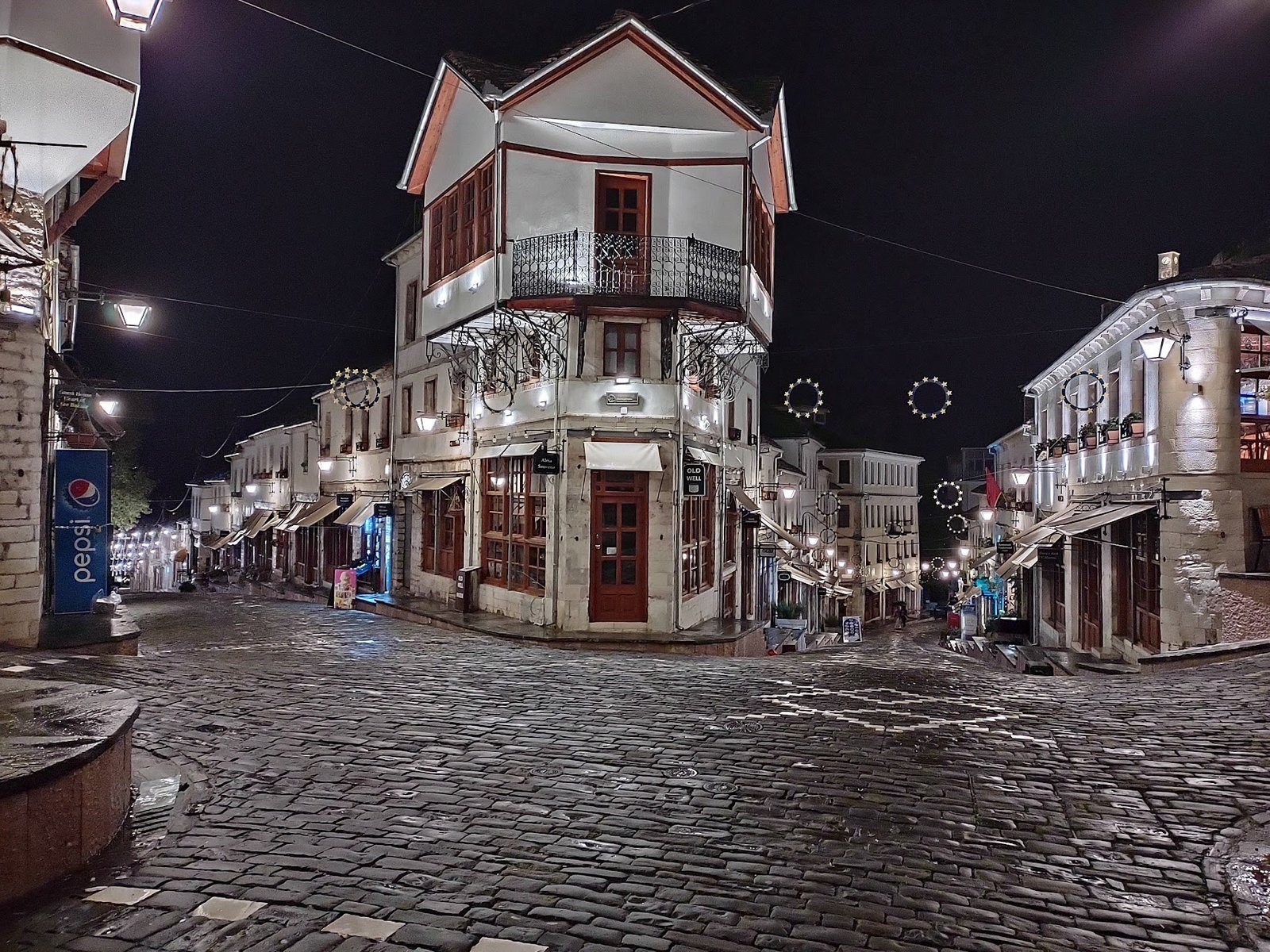
The historic centre clusters around the bazaar district and the Kala (castle), with streets of kulla (tall stone tower-houses with fortified ground floors and lavishly decorated upper storeys) rising steeply up the hillside. The best examples date from the 17th and 18th centuries, when Gjirokastër was a major commercial and administrative hub under the rule of the powerful Ali Pasha of Ioannina. The city's most famous son, the novelist Ismail Kadare, was born here in 1936 and his birthplace is now a museum.
The castle itself is extraordinary: a massive complex of towers, cisterns, and vaulted halls that has served as a Byzantine fortress, an Ottoman stronghold, a prison under the communist regime, and now a museum complex. Its collections include captured US aircraft, a remarkable armoury, and sweeping views across the valley that justified its strategic importance for centuries.
UNESCO's 2005 inscription described Gjirokastër as "a rare example of a well-preserved Ottoman town, built by farmers of large agricultural estates." The city's landscape of uniform grey-stone rooftops, visible from the castle ramparts, is one of the most iconic heritage views in the Balkans.
Explore Gjirokastër →3 Natural and Cultural Heritage of the Ohrid Region
Albania Extension Inscribed 2019 · Transboundary with North MacedoniaLake Ohrid is one of the oldest and deepest lakes in Europe; some estimates put its age at over three million years. It sits on the border between Albania and North Macedonia, a jewel of clear blue water ringed by mountains and dotted with ancient settlements. The North Macedonian side of the lake, along with the city of Ohrid, was first inscribed as a UNESCO World Heritage Site in 1979 and 1980. In 2019, that inscription was extended across the border to encompass the Albanian shoreline and its outstanding natural and cultural values.
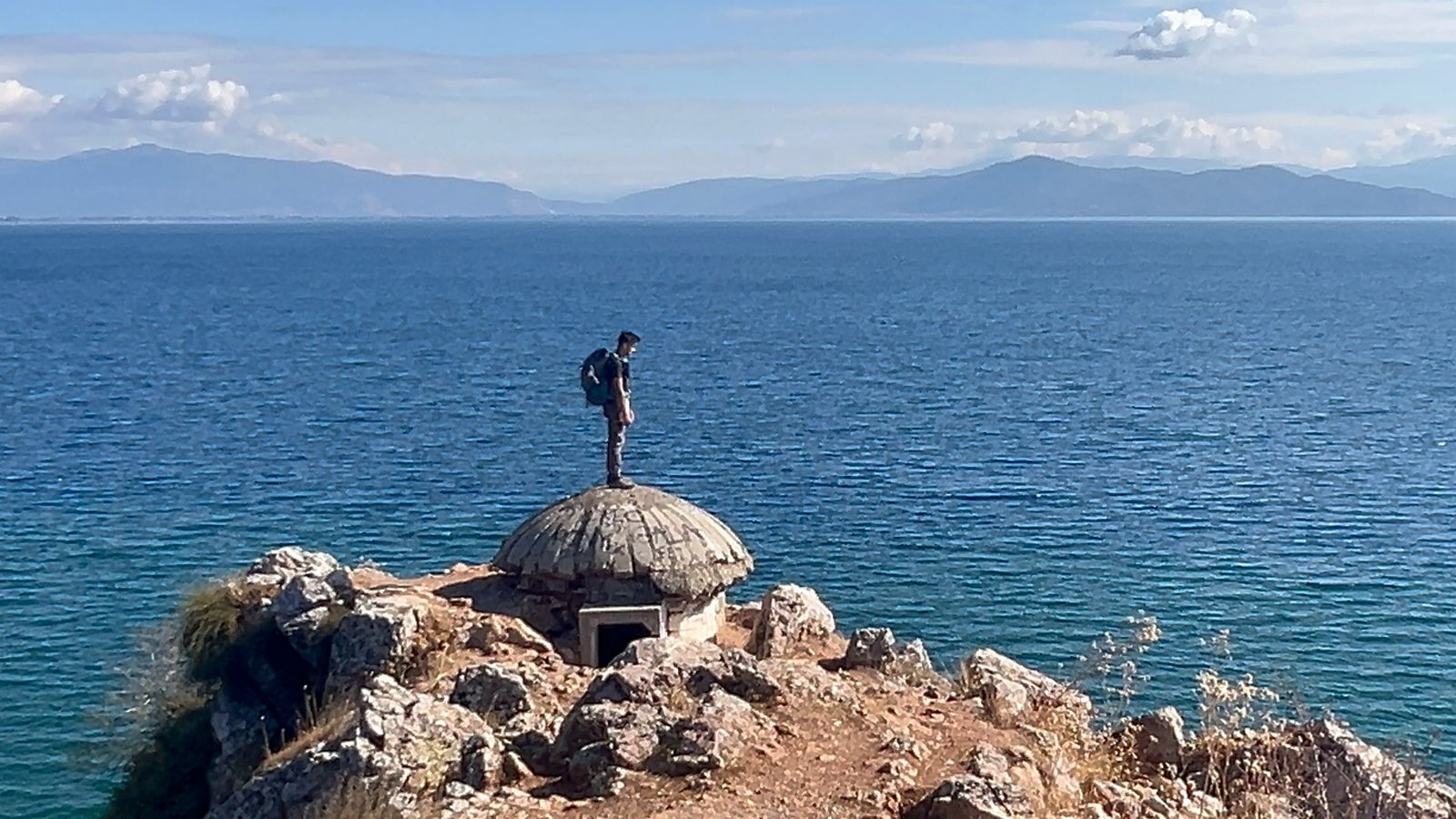
The Albanian portion of the site encompasses the western and southern shores of the lake, including the town of Pogradec and the surrounding landscape. Lake Ohrid is one of a handful of ancient lakes in the world: a lake so old that it has developed its own unique ecosystem, with over 200 endemic species found nowhere else on Earth, including ancient relict species of fish, molluscs, sponges, and algae that have evolved in isolation for millions of years.
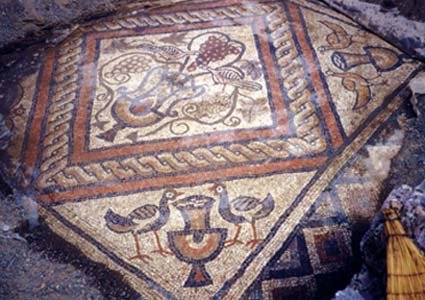
The cultural heritage of the Albanian shore is equally compelling. The Early Christian mosaic of Lin Village, a 6th century floor mosaic discovered beneath a simple village church overlooking the lake, is one of the finest early Byzantine mosaics in the entire Balkans. Measuring over 170 square metres, its intricate geometric and figural designs survived more than 1,400 years beneath the floorboards of successive buildings before its rediscovery. It is now protected in situ within a dedicated shelter.
The Illyrian Royal Tombs near Selca e Poshtme, the remains of ancient Lin settlements on the lake peninsula, and a series of early Christian churches add to the extraordinary cultural density of the Albanian Ohrid shore. The lake itself, when the light is right, turns a shade of blue that has no precise equivalent in colour charts: the product of its extraordinary clarity and depth, which reaches 289 metres at its deepest point.
Explore Pogradec & Lake Ohrid →Lake Ohrid is not just ancient; it is a relic of a world before the last Ice Age, its endemic species a living record of evolution untouched by the glacial extinctions that swept the rest of Europe.
4 Ancient and Primeval Beech Forests
Albania Extension Inscribed 2017 · Transboundary Across EuropeAlbania's fourth UNESCO inscription is also its most unexpected. In 2017, a vast transnational World Heritage Site covering the ancient and primeval beech forests of Europe was expanded to include an Albanian component: the Gashi River valley in Kukës County and the Rrajcë forest in the Elbasan/Librazhd area. The transnational site spans 18 countries and represents the most complete surviving example of undisturbed temperate broadleaf forest ecosystems in Europe.

The Rrajca forest is a rare remnant of old-growth European beech (Fagus sylvatica): trees that have never been logged, managed, or significantly disturbed by human activity. These forests are scientifically exceptional: they preserve natural processes of forest succession, regeneration, and decay that have been eliminated from almost all of Europe's managed woodlands. Dead and dying trees, hollow trunks, and layers of undisturbed leaf litter support an extraordinary biodiversity of fungi, insects, birds, and mammals.
Primeval beech forests are also climate archives. Their uninterrupted growth rings and stable soil chemistry preserve data about European climate patterns going back centuries, data that cannot be recovered from managed or replanted forests. Albania's contribution to this transnational inscription acknowledges that some of the continent's most ecologically intact forests are found not in western Europe's nature reserves but in the overlooked highlands of the Albanian interior.
The Rrajca forest is not a tourist destination in the conventional sense (there are no visitor centres or marked trails) but it can be reached from the Librazhd area and explored with a local guide. Its inclusion in the World Heritage list is a recognition that Albania's wildest landscapes carry the same global significance as its most famous ruins and castles.
Planning Your Visit
Albania's four UNESCO inscriptions span the full length and breadth of the country, making a combined heritage circuit one of the most rewarding journeys in the entire Mediterranean. All four can be woven into a single two-week trip: fly into Tirana, drive east to Pogradec for Lake Ohrid (and the Lin mosaic), continue south to Gjirokastër, loop down to Sarandë for Butrint, then return north via Berat. The Rrajca beech forests in Librazhd can be added as a detour on the return journey.
For the cultural sites (Butrint, Berat, and Gjirokastër) entry fees are modest by European standards, typically 200–700 Albanian Lekë per site (approximately €2–7). Butrint has the most developed visitor infrastructure, with a paved path network and good English signage. Berat and Gjirokastër are best explored on foot through their old town streets; guides can be hired at castle entrances and significantly enhance the experience. The Lin mosaic in Pogradec is usually accessible with advance arrangement through the local municipality.
Lake Ohrid is accessible from Pogradec town, which has good hotels and restaurants. Ferries and small boats can be hired for lake excursions. For the Rrajca beech forests, contact local guides in Librazhd; there is no formal visitor infrastructure, and the forest is best experienced as a guided half-day trek.
The best time for all four sites is April–June or September–October: comfortable temperatures, good light, and lighter visitor numbers. Butrint in spring is particularly magical, when the surrounding wetlands are alive with migratory birds and wildflowers frame the ancient stones. Lake Ohrid in summer is warm enough for swimming from the pebble beaches of the Albanian shore, with the added advantage that it remains much quieter than the North Macedonian side.
Albania's four UNESCO inscriptions span an ancient lake, primeval forests, buried Greek cities, and Ottoman hilltop towns; together they make the case that this small country contains some of the most significant heritage on the planet.
Albania's UNESCO Tentative List
Beyond its four inscribed sites, Albania has four additional places on UNESCO's tentative list: the official shortlist from which future nominations must be drawn. Each of these sites has already been recognised as having outstanding universal value worthy of nomination; formal inscription is a matter of when, not whether. They represent some of Albania's most compelling historic and archaeological sites, and all four are worth visiting now, long before the tourist crowds arrive.

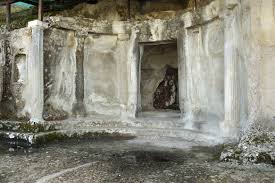


All four tentative sites have strong cases for eventual full inscription. The Durrës amphitheatre in particular, the largest Roman amphitheatre in the Balkans, with its unique early Christian chapel interior, would arguably deserve UNESCO status on its own merits. The Royal Tombs of Selca e Poshtme and Apollonia have been waiting for nomination since 1996, a reminder that the UNESCO process is slow even for places of unquestionable significance.