
Albania is one of Europe's most historically layered countries, and one of its least understood. The Illyrians built here before Rome; the Romans built over them; then came the Byzantines, the Normans, the Venetians, the Ottomans, and finally a communist dictatorship that sealed the country off from the world for nearly half a century. The result is a country whose historic sites range from Illyrian royal tombs to UNESCO-listed Ottoman cities to Early Christian mosaics of startling beauty, all largely unknown to the international traveller.
This guide brings together the ten sites we consider essential: the places that best capture Albania's extraordinary depth of history, that reward the effort of getting there, and that stay with you long after you've left.
Albania packs more history per square kilometre than almost anywhere in Europe. The challenge is not finding something extraordinary to see; it is deciding what to leave out.
1. Butrint: Albania's Ancient City in the Trees

At the top of any list of Albanian historic sites sits Butrint, ancient Buthrotum, a city that has been Greek, Roman, Byzantine, and Venetian, and now belongs to the trees. Located on a forested peninsula in the far south, just 18 km from Sarandë and a short ferry crossing across a narrow channel, Butrint is a UNESCO World Heritage Site that contains a 3rd-century BC Greek theatre, extraordinary Early Christian mosaics in its domed baptistery, Roman forum and bath-house remains, and a Venetian castle that still guards the waterway. The site's atmosphere, wild, atmospheric, lightly visited, is unlike almost any other major archaeological site in Europe.

2. Berat: The City of a Thousand Windows

Berat is one of Albania's two UNESCO-listed cities, and the most visually arresting town in the country. Its Ottoman-era houses climb the hillside in white-plastered ranks, their large windows stacked so closely together that from below they seem to merge into a single glittering facade; hence the name "City of a Thousand Windows." Above the houses sits Berat Castle, an inhabited hilltop fortress whose Byzantine churches were converted to mosques under Ottoman rule, then returned to Christian use after independence. The Onufri Museum inside the castle holds some of the finest Orthodox icons in the Balkans. Below the castle, in the Mangalem quarter, the lanes and mosques of the Ottoman town survive almost intact.

3. Gjirokastër: The City of Stone
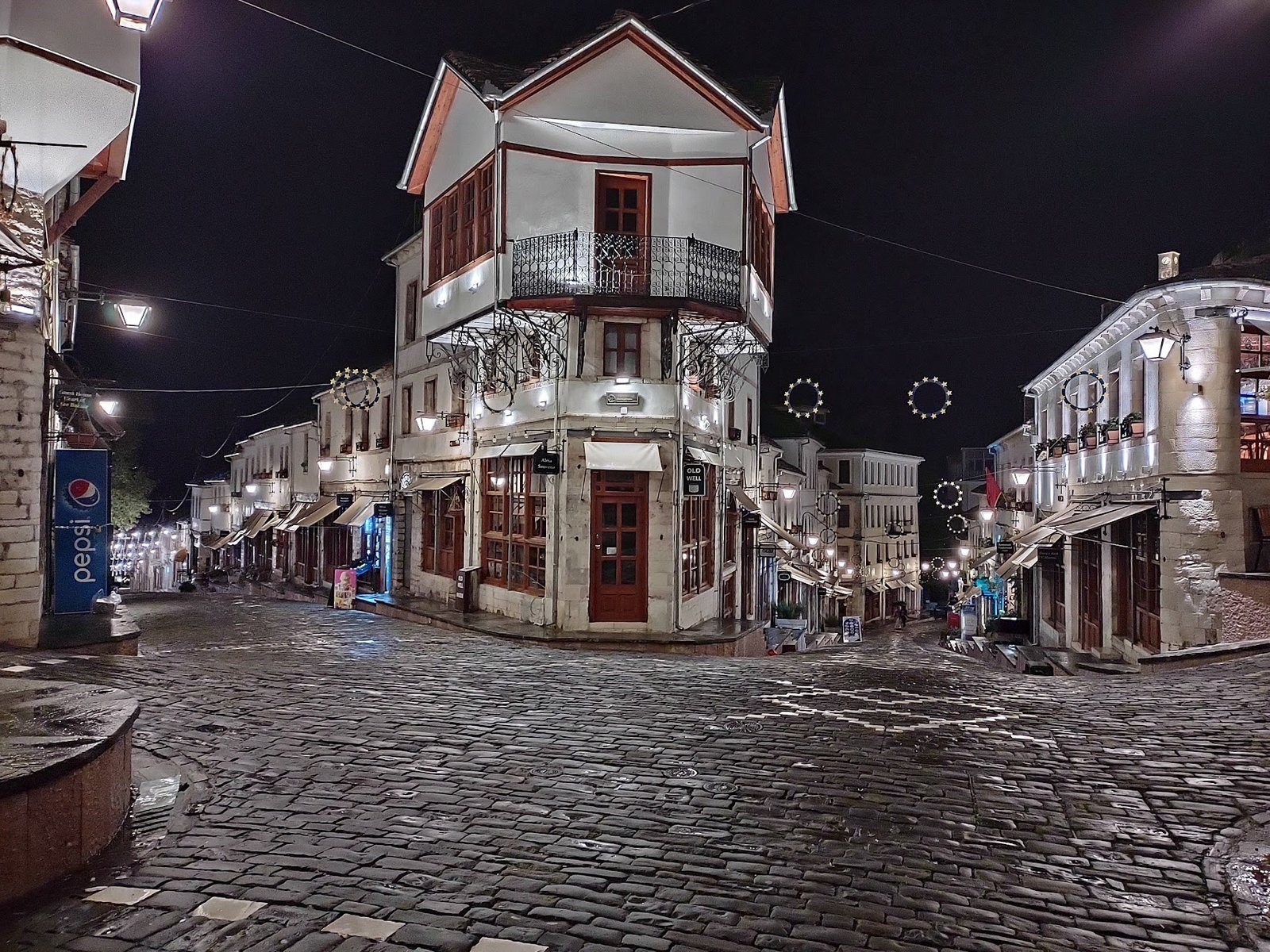
Albania's second UNESCO city, Gjirokastër is carved from grey limestone and built on a steep hillside above the Drino valley, with the vast castle dominating the skyline from every angle. Where Berat is warm and white, Gjirokastër is cool and grey: a fortress city of imposing stone houses with slate roofs and defensive towers. The castle contains an extraordinary museum including a captured American spy plane, a remarkable collision of ancient fortress and Cold War drama. The restored Old Bazaar below the castle is one of the most atmospheric Ottoman streetscapes in the Balkans, and the kule (tower-houses) of the old quarter, best seen in the Zekate and Skenduli houses, are among the finest examples of Ottoman domestic architecture anywhere in the world.
Explore Gjirokastër →4. The Roman Amphitheatre of Durrës

Durrës, ancient Epidamnus, then Dyrrachium, was one of Rome's most important ports on the Adriatic, the eastern terminus of the Via Egnatia that connected Rome to Constantinople. The city's Roman amphitheatre, discovered only in 1966 when building works cut through its vaulted corridors, is the largest in the Balkans, capable of seating up to 20,000 spectators. Parts of it are embedded within the modern city, with apartment buildings sitting directly above the ancient structure. A Byzantine chapel built into the arena wall retains faded but extraordinary frescoes, a glimpse of late antique devotional art in a wholly unexpected setting.
Explore Durrës →5. Rozafa Castle, Shkodër

Shkodër's Rozafa Castle occupies a dramatic rocky hill above the confluence of three rivers (the Drin, the Buna, and the Kir) and has been fortified since Illyrian times. The castle's name comes from one of Albania's most enduring legends: the story of the woman Rozafa who agreed to be built alive into the castle walls so that its foundations would hold, asking only that her right breast, right hand, and right foot be left uncovered so she could nurse her infant son. The castle's successive Illyrian, Roman, Byzantine, Venetian, and Ottoman layers make it a compressed history of northern Albania in stone.
Explore Shkodër →6. Apollonia: A Greek City in the Fields

Founded by Greek colonists from Corinth and Corcyra in the 6th century BC, Apollonia became one of the most prosperous cities of the ancient Adriatic; Julius Caesar called it a "great and important city." Augustus studied there as a young man, and it was at Apollonia that he received the news of Caesar's assassination. The site today, set on a low hill outside Fier near Vlorë, reveals the remains of the agora, the bouleuterion (council house), a portico, temples, and an early Christian monastery built within the ruins: a 2,600-year palimpsest of civilisations written in marble and limestone.
Explore Vlorë →7. Pogradec Castle
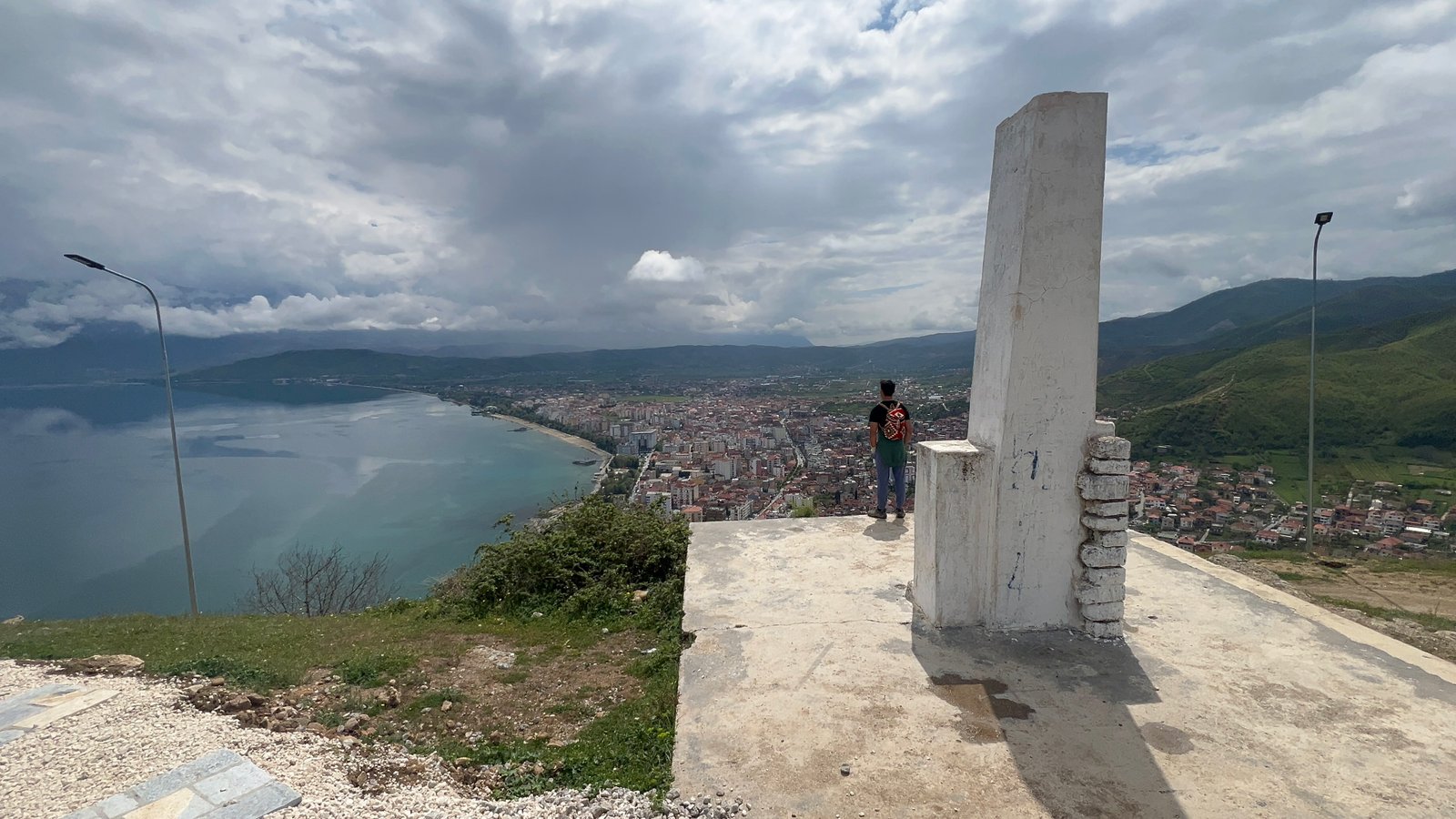
Perched 205 metres above Lake Ohrid on the Albanian eastern shore, Pogradec Castle has been occupied since at least the 5th century BC and was fortified by the 4th century BC. The Byzantine Emperor Justinian I ordered major renovations in the 6th century AD, and the castle subsequently passed between Bulgarian, Byzantine, and Serbian control before the Ottoman period. A Cultural Monument of Albania since 1973, the castle rewards the climb with extraordinary views across the glittering lake to the mountains of North Macedonia. The Pogradec region as a whole is one of Albania's richest for historic sites; see also the Royal Tombs of Selca e Poshtme and the Early Christian mosaics of Lin Village nearby.
Explore Pogradec →8. Royal Tombs of Selca e Poshtme
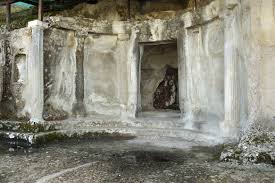
One of the most significant and least-visited Illyrian archaeological sites in the Balkans, the Royal Tombs of Selca e Poshtme are a necropolis of monumental rock-cut chamber tombs dating from the 4th to 3rd centuries BC, believed to be the burial place of the kings of the Enchelei and later Dessaretii tribes. The tombs feature carved facades with Doric and Ionic columns cut directly into the limestone cliff, a remarkable fusion of Illyrian and Hellenistic architectural styles that reveals the sophistication and cultural connections of Illyrian royal culture at its height. Few visitors make the effort to reach this remote site, but those who do are rewarded with an experience of genuine archaeological discovery.
See Royal Tombs →9. Lin Village Early Christian Mosaic
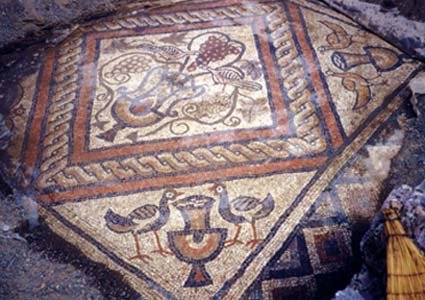
The picturesque peninsula village of Lin on Lake Ohrid's Albanian shore contains the remains of a 5th-century Early Christian basilica whose floor mosaic, featuring geometric patterns, animal motifs, and a visual vocabulary of paradise, is among the finest of its type in the region. The site sits largely open to the elements, accessible to any visitor who makes the beautiful drive along the lake shore to the rocky peninsula. The combination of the mosaic, the lake views, and the communist-era concrete bunkers dotting the shoreline creates one of Albania's most surreal and affecting juxtapositions: layers of history compressed into a single small headland.
See Lin Village →10. Cathedral of the Resurrection of Christ, Korçë

Korçë is Albania's most cultured provincial city, a place of coffeehouses, art museums, and a fiercely maintained tradition of intellectual life, and its Cathedral of the Resurrection of Christ is both its spiritual heart and a monument to survival. The original 19th-century cathedral was demolished by Enver Hoxha's regime in 1968 as part of Albania's experiment as the world's first officially atheist state. Rebuilt and reconsecrated in 1992, immediately after the fall of communism, the cathedral's interior is decorated with magnificent frescoes in the Byzantine tradition painted by contemporary Albanian artists: a powerful act of cultural and religious restoration. The National Museum of Medieval Art nearby, with its 7,000-piece collection of Orthodox icons, makes Korçë an essential stop for anyone interested in Albanian Christian heritage.
Explore Korçë →Planning Your Visit
Most of these sites can be combined into a two-week circuit of Albania with a hired car. The southern route (Tirana, Berat, Gjirokastër, Butrint, Sarandë) is the most popular and logistically straightforward. The eastern route through Korçë, Pogradec, and the Lake Ohrid shore is less travelled but arguably more rewarding for the historically curious visitor. Durrës and Shkodër sit conveniently close to Tirana for day trips at the start or end of any itinerary. Albania's road network has improved enormously in recent years, though some of the more remote sites (the Royal Tombs of Selca, Lin Village, Apollonia) require a car and some patience with rural roads.
Entry fees at Albanian historic sites are uniformly low by European standards. The sites that charge admission (Butrint, Gjirokastër Castle, Durrës Amphitheatre, Rozafa Castle) all cost less than €5. Most are free. The best time to visit is April to June or September to October, avoiding both the summer heat and the August crowds that now descend on the Albanian Riviera.